
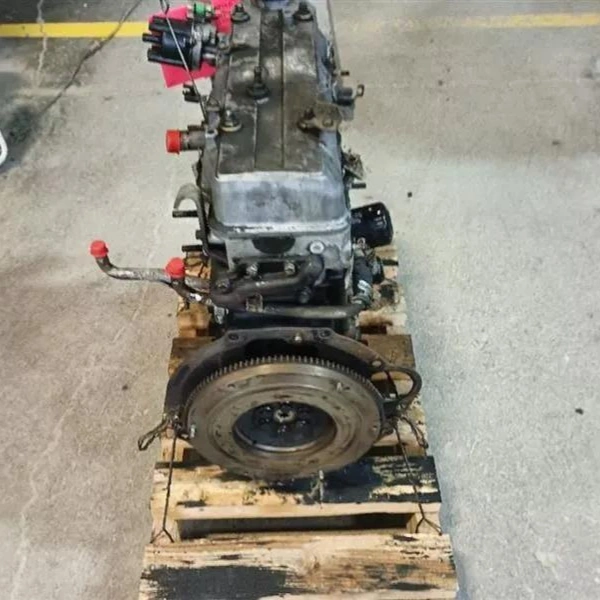
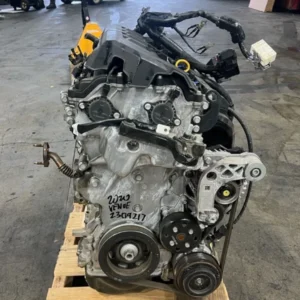
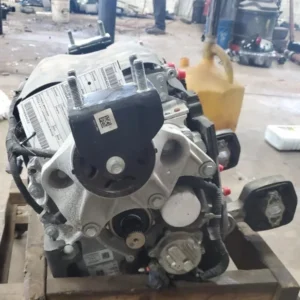
Toyota 22RE Engine for Sale | 2.4L EFI Inline-4 Pickup and 4Runner
$699.00
Product Overview & Specifications
- In Stock, Multiple Year Ranges Available 1983 to 1995
- Free Shipping to All 50 States via Freight Pallet, 5 to 10 Business Days
- All 4 Cylinders Compression Tested, Results Available Before You Pay
- Pre-1985 vs Post-1985 Block Generation Confirmed Before Every Order Ships
- 22RE EFI vs 22R Carbureted Configuration Confirmed
- Head Gasket Condition Specifically Assessed (Known Failure Point)
- Coolant Cross-Contamination Check on Every Unit
- No Core Charge, Keep Your Old Engine
- 15 Day Replacement Warranty on Internal Defects
 100% Fitment Assistance
 15 Days Replacement Warranty
 Free & Fast Shipping
About the Toyota 22RE Engine
The Toyota 22RE is one of the most reliable inline-four engines ever built for a production vehicle. With its 2.4-liter displacement, SOHC design, and Toyota EFI system, the 22RE powered the Toyota Pickup (known internationally as the Hilux) and the Toyota 4Runner from 1983 through 1995. Many examples exceed 300,000 miles with regular maintenance, some documented examples have approached 500,000 miles. This is not marketing language: it is why the Toyota Pickup and early 4Runner became the reference vehicle for reliability in cultures from rural America to the Australian outback to conflict zones worldwide.
The 22RE distinguishes itself from the carbureted 22R by its Toyota EFI system, an L-type airflow meter-based injection setup that provides consistently accurate fuel delivery across temperature extremes, altitude changes, and load variations. For off-road use in particular, the EFI’s consistent operation regardless of vehicle angle gives the 22RE a significant advantage over the 22R’s carburetor, which can flood or starve on steep grades.
The critical piece of information every 22RE buyer needs to know: Toyota significantly redesigned the 22RE in 1985. The post-1985 block has a different deck height. The cylinder head, pistons, timing components, water pump, and oil pump all changed. Pre-1985 and post-1985 parts are largely not interchangeable. Installing a pre-1985 head on a post-1985 block, or vice versa, will cause severe compression problems and potential engine damage. We confirm block generation before every order ships.
Signs You Need a Replacement Engine
- Coolant loss without visible external leak (head gasket failure, the most common major 22RE failure). Check the oil for a milky appearance or the coolant for oiliness.
- Blue smoke under hard acceleration (valve stem seal wear or piston ring wear on high-mileage units)
- Hard cold start or rough cold idle that resolves after warmup (EFI cold start system issue, airflow meter failure, or coolant temperature sensor fault)
- Oil burning on all conditions not just cold start (ring and cylinder wall wear on high-mileage engines)
- Timing chain rattle on cold start that persists after warmup (timing chain tensioner or guide wear)
- Fuel delivery hesitation under load (clogged injectors or failing airflow meter)
Known Problems With This Engine
- Head gasket failure, the 22RE‘s primary weakness: Despite legendary reliability overall, the 22RE aluminum head gasket is the engine’s Achilles heel. Overheating at any point in the engine’s life compromises the head gasket. We compression test all 4 cylinders and inspect coolant for contamination before shipping. Any unit showing signs of head gasket failure is rejected.
- Pre-1985 vs post-1985 block incompatibility: This is the most common installation mistake. In 1985, Toyota changed the cylinder head, block deck height, timing system, and pump configurations. Parts from the two generations do not interchange. If you are replacing a post-1985 22RE with a pre-1985 unit (or vice versa), all associated components must also be swapped to match the new engine’s generation. We flag this on every order.
- Airflow meter (MAF) failure on aged EFI units: The L-type airflow meter (called the AFM or MAF depending on market) in the Toyota EFI system can fail on aged vehicles, causing rough idle, hesitation, and lean running. This is an external component not included with the engine but we note any related diagnostic indicators we observe.
- Timing chain single-row vs dual-row: The pre-1983 22R used a dual-row timing chain. The 1983-onward 22RE used a single-row chain with plastic guides. The single-row chain system requires more careful monitoring for guide wear. We inspect for timing chain noise before shipping.
- Carbon buildup on SOHC head: High-mileage 22RE engines can accumulate significant carbon deposits on the intake valves. This is the result of normal hydrocarbon deposits from the PCV system. A compression test will still show good numbers despite carbon buildup. We note any visual indicators of excessive carbon during inspection.
| displacement | 2, 366 cc (2.4L / 144.4 cu in) |
|---|---|
| engine-code | 22R-E |
| configuration | 8 valves, Inline-4, SOHC |
| bore-x-stroke | 92 mm x 89 mm |
| compression-ratio | 9.3:1 |
| horsepower | 105 hp (1983 to 1988), 112 hp (1989 to 1995) |
| torque | 137 lb-ft (1983 to 1988), 142 lb-ft (1989 to 1995) |
| firing-order | 1, 2, 3, 4 |
| aspiration | Naturally Aspirated |
| fuel-system | Electronic Fuel Injection (L-type airflow meter) |
| timing-system | not a belt, Timing chain |
| block-material | Cast Iron |
| head-material | Aluminum alloy (crossflow) |
| critical-note | parts NOT interchangeable between generations, Pre-1985 and post-1985 blocks |
| production-years | 1983 to 1995 |
| manufacturer | Toyota Motor Corporation |
| applications | select international applications, Toyota 4Runner, Toyota Pickup (Hilux) |
| price | $699.00 |
FAQs
What is the difference between the 22R and 22RE?
What is the pre-1985 vs post-1985 difference in the 22RE?
Can I use a 22R carburetor if I buy a 22RE?
Why does the 22RE have such a legendary reputation for reliability?
Is there a core charge?
What transmission pairs with the 22RE?
Is the 22RE compatible with alternative fuels like E85?
What kind of mileage can I expect from the 22RE?
Be the first to review “Toyota 22RE Engine for Sale | 2.4L EFI Inline-4 Pickup and 4Runner”
Related products
Engine
Engine
Reviews
There are no reviews yet.