
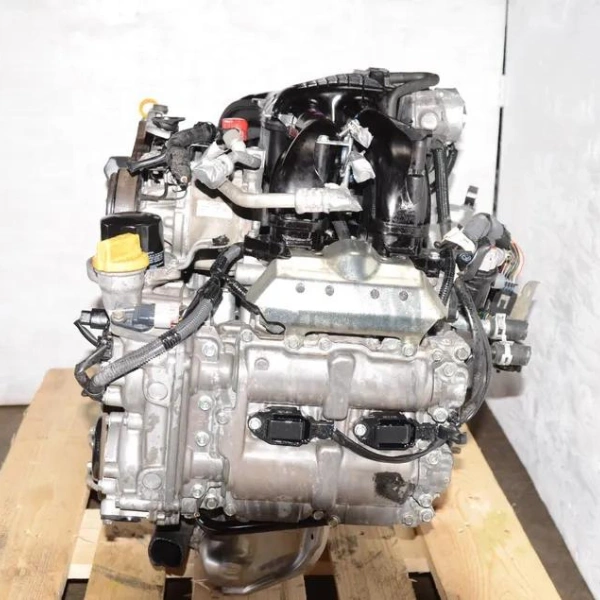
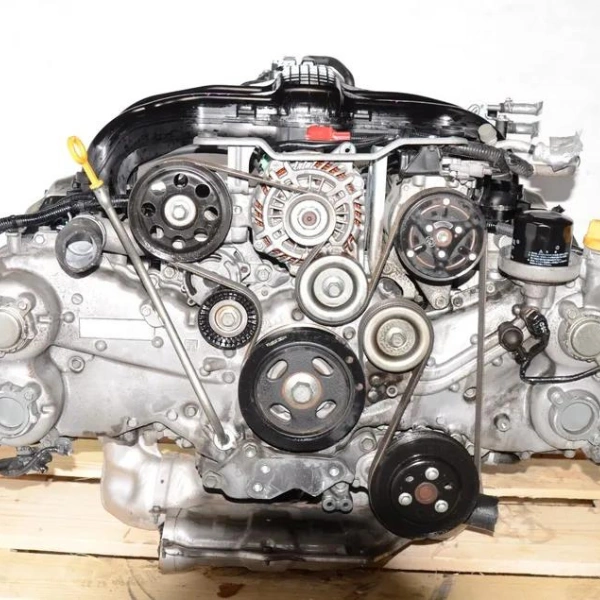
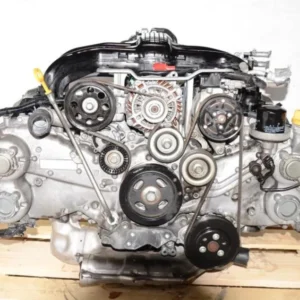
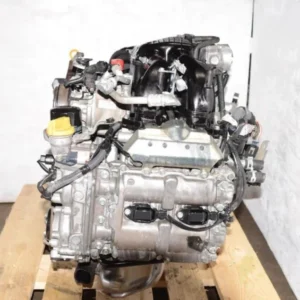
SUBARU FB25 ENGINE FOR SALE
$1,999.00
Product Overview & Specifications
- Engine Generation Verified: FB25 current (NOT older EJ25 NA SOHC)
- All 4 Cylinders Compression Tested: Quality verified
- AVCS Variable Valve Timing Tested: Intake AND exhaust camshafts
- Oil Consumption Assessment: Critical 2011-2014 service item check
- Timing Chain Condition Inspected: High-mileage service item
- Semi-Closed Deck Block Inspected: Major improvement over EJ25
- Direct Injection Tested: Where applicable for 2018+ variants
- Carbon Buildup Assessed: Direct-injected FB25 variants
- Donor Vehicle Confirmed: Forester / Outback / Legacy / Crosstrek / Ascent
- Subaru TSB Awareness: Service history verification
- Subaru FB25 Specialist Support: Current generation expertise
- Free Shipping All 50 States: Freight pallet delivery
- No Core Charge: Keep your old engine
- 15 Day Warranty: Internal defects covered
 100% Fitment Assistance
 15 Days Replacement Warranty
 Free & Fast Shipping
Unleash the Power of Reliability: Subaru FB25 Engine for Sale
The expertise of Japanese engineering is on full display in the Subaru FB25 engine. Introduced in 2011 as a clean-sheet redesign of Subaru’s 2.5L NA flat-4 boxer engine, this powerplant became the heart of many beloved modern Subaru models with reliability so strong it ranks near legendary. The engine produces the signature Boxer Rumble that defines Subaru’s sound. When you look at this Subaru FB25 engine for sale, know that you are not just buying an engine. The FB25 makes the promise of adventure, ready to tackle winding mountain roads or bustling city streets with equal capability.
So whether you’re off-roading on weekends or driving daily commutes, this FB25 engine for sale is ready to power your next trip.
Engine Overview: Subaru FB25 (The Modern 2.5L Replacement for EJ25 NA)
The Subaru FB25 engine is part of the FB-series family of Subaru engines that replaced the older EJ-series starting in 2010-2011. With a displacement of 2.5L (2,498 cc), this flat-four engine features Subaru’s signature horizontally opposed “boxer” layout, where pistons move side-to-side, counterbalancing each other. This ensures a lower center of gravity, contributing to better stability and handling. Equipped with advanced technology including DOHC per bank, AVCS variable valve timing on both intake and exhaust, and a high compression ratio (with later variants using direct injection at 12.0:1), the FB25 is fuel efficient and performs well. Being compact, the Subaru FB25 engine for sale here ensures better weight distribution in your vehicle.
The Major Engineering Improvements Over EJ25
The FB25 represents one of the biggest Subaru engineering advances of the past 25 years, addressing many of the older EJ25’s known weaknesses:
The semi-closed deck block design is the single most important improvement , it addresses the well-known EJ25 head gasket failures by significantly reducing block flex under thermal cycling. This alone makes the FB25 a much more durable engine than its predecessor.
FB25 Generations and Evolution
The FB25 has evolved across its production run:
Early FB25 (2011-2013) , Live Page Stock Specifications
HP: 170 HP at 5,600 RPM
Torque: 174 lb-ft at 4,100 RPM
Compression: 10.0:1
Fuel System: Multi-port injection
Production: 2011-2013
Common Applications: Forester (2014 4th gen launch used 2011 FB25 from Outback/Legacy lineage), Outback (2010-2014 5th gen), Legacy (2010-2014 6th gen)
Known Issue: Some examples developed oil consumption issues due to piston ring design
Mid-Cycle FB25 (2014-2017)
HP: 175-178 HP at 5,800 RPM
Torque: 174 lb-ft at 4,100 RPM
Fuel System: Multi-port injection (refined)
Production: 2014-2017
Improvements: Revised piston rings to address oil consumption, minor refinements
Common Applications: Forester (4th gen 2014+), Outback (5th gen 2015+), Legacy (6th gen)
Later FB25 (2018+) , Direct Injection on Some Applications
HP: 182-185 HP at 5,800 RPM
Torque: 176-178 lb-ft at 4,100 RPM
Compression: Up to 12.0:1 on direct-injected variants
Fuel System: Direct injection on some applications (Forester, Crosstrek, Outback)
Production: 2018-present
Improvements: Direct injection, revised combustion chambers, updated engine management
Common Applications: Forester (5th gen 2019+), Outback (6th gen 2020+), Legacy (7th gen 2020+), Crosstrek (2018+)
Vehicle Applications
Features of Subaru FB25 Engine
Boxer Engine Layout: Horizontally opposed configuration gives lower center of gravity, increasing vehicle stability and handling
Better Fuel Efficiency: Modern engineering methods and lighter materials result in improved fuel economy
Low Emissions: Latest emission control technologies achieve very low emissions, meeting strict environmental standards
Enhanced Durability: Quality components and semi-closed deck block design address EJ25 weaknesses
DOHC with AVCS on Both Cams: Variable valve timing on intake AND exhaust for optimal performance and efficiency
Modern Combustion Chamber: Optimized design for clean combustion
Direct Injection (2018+): Modern fuel delivery on later applications
Semi-Closed Deck Block: Major improvement over EJ25 open-deck design
Regular Fuel: 87 octane acceptable
Common FB25 Service Items (Honest Disclosure)
While the FB25 addresses many EJ25 weaknesses, it has its own service items:
Oil Consumption (2011-2014 FB25 specifically): The most important FB25 service item to know. Some early FB25 engines develop higher-than-normal oil consumption starting at 60,000-100,000 miles. The cause was piston ring design issues. Subaru’s response: Extended warranty coverage on affected engines, offered piston ring replacement (a major engine service requiring engine removal). When buying any 2011-2014 FB25, verify any piston ring service was performed. Later FB25 engines (2015 onward) addressed this with revised piston rings.
Timing Chain Tensioner: At very high mileage (180,000+ miles), timing chain tensioners can develop rattle. Less common than EJ25 head gasket issues but documented.
Carbon Buildup (Direct-Injected 2018+ Variants): Direct-injected FB25 variants can develop intake valve carbon buildup at 80,000-100,000 miles. Walnut blasting service required.
Oil Pressure Sensor Failures: Occasional sensor failures producing low oil pressure warnings.
PCV Valve Issues: Aging PCV valves can affect oil consumption and emissions performance.
Spark Plug Service: 60,000 mile intervals, NGK iridium plugs recommended.
Head Gaskets Are NOT a Major FB25 Concern
Important note: unlike the EJ25 NA SOHC engines that preceded the FB25, head gasket failures are NOT a typical service item on the FB25. The semi-closed deck block design fundamentally addresses the issue. While any aluminum engine can develop head gasket issues at very high mileage with poor maintenance, the FB25 is significantly more resistant to this failure mode than its EJ25 predecessor.
Why Choose a Used Subaru FB25 Engine?
Cost savings vs new ($1,999 used vs $6,500-$9,500 new crate FB25)
Direct OEM fit for Forester, Outback, Legacy, Crosstrek, Ascent
Modern engineering , semi-closed deck addresses EJ25 weaknesses
AVCS on both cams , superior valvetrain vs older EJ25 SOHC
AWD compatibility , direct mate for Subaru’s symmetrical AWD
Regular fuel , 87 octane acceptable for daily use
Strong availability , high-volume current production engine
Significantly improved reliability vs the EJ25 NA generation it replaced
Here, you’ll find this Subaru FB25 engine for sale at the most reasonable price possible, with engine generation verified (FB25 specifically), donor vehicle confirmation, all 4 cylinders compression tested, AVCS function verified on both intake and exhaust, oil consumption assessment performed (critical for 2011-2014), and complete inspection.
| engine-type | DOHC, Flat-4 (horizontally opposed boxer), naturally aspirated |
|---|---|
| engine-family | Subaru FB-series (successor to EJ-series) |
| manufacturer | Subaru Corporation |
| configuration | Flat-4 (horizontally opposed boxer |
| displacement | 2.5L (2, 498 cc) |
| bore-x-stroke | 94.0 mm x 90.0 mm |
| hp-range | 170 HP early to 185 HP later |
| torque-range | 100 RPM, 174 to 178 lb-ft at 4 |
| compression | 10.0:1 (early) to 12.0:1 (direct-injected) |
| aspiration | Naturally Aspirated |
| fuel-system | Multi-port injection (early) or direct injection (2018+) |
| fuel-type | Regular 87 octane |
| valvetrain | 16 valves, AVCS on intake AND exhaust, DOHC per bank |
| block-material | Semi-closed deck aluminum |
| head-material | Aluminum |
| cooling-system | Liquid cooled |
| production-years | 2011 to present |
| direct-fit | Ascent variants, Crosstrek 2018+, Forester 2014+, Legacy 2010+, Outback 2010+ |
| predecessor | EJ25 NA SOHC (1995-2013) |
What is the Subaru FB25 engine?
How is the FB25 different from the older EJ25?
Which Subaru models use the FB25?
Are FB25 and EJ25 interchangeable?
What’s the FB25 oil consumption issue?
Does the FB25 have head gasket issues like the older EJ25?
Does the FB25 need premium fuel?
How long does the Subaru FB25 typically last?
Be the first to review “SUBARU FB25 ENGINE FOR SALE”
Related products
Engine
Engine
Engine
Reviews
There are no reviews yet.