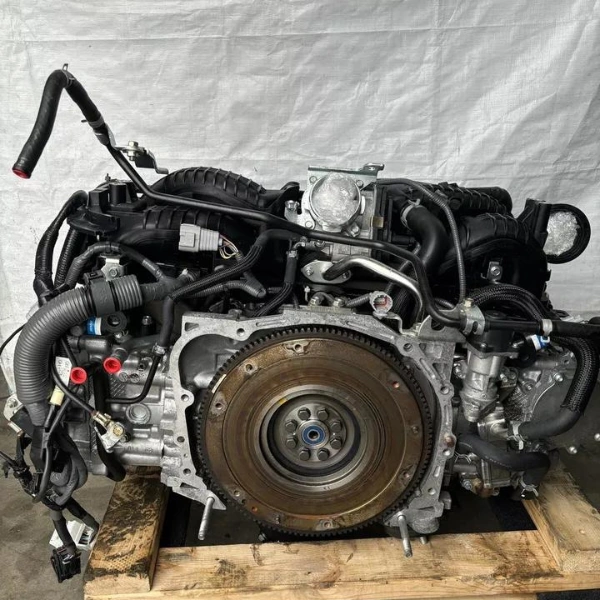
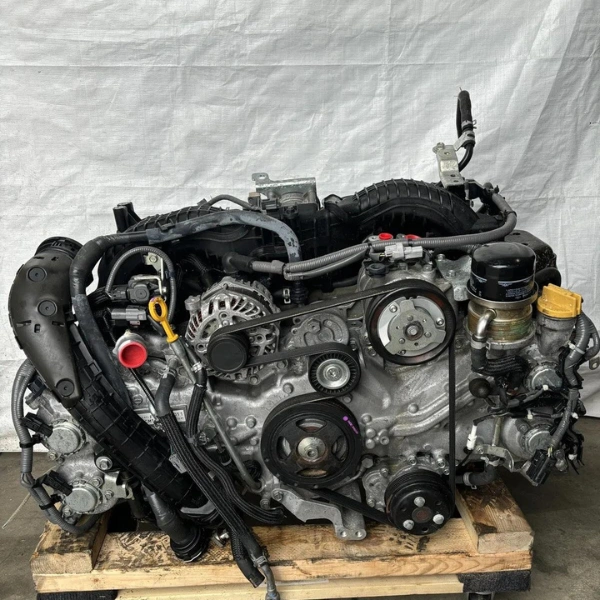
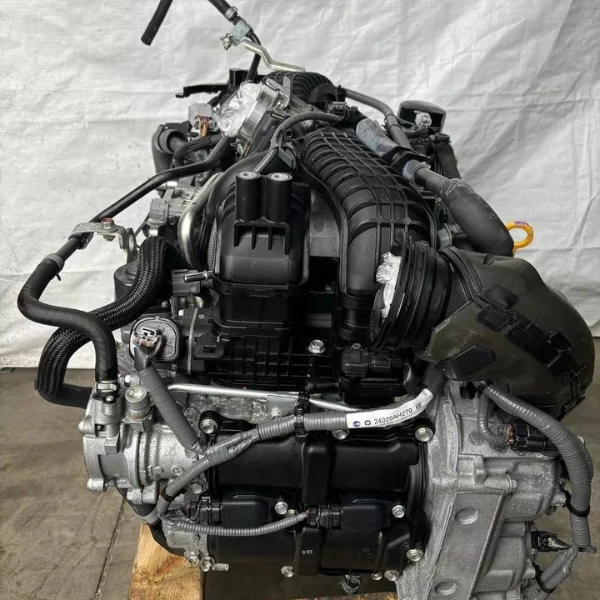
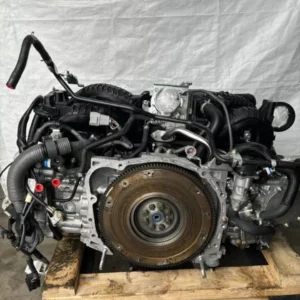
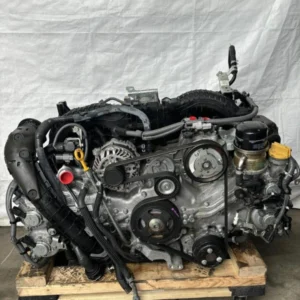
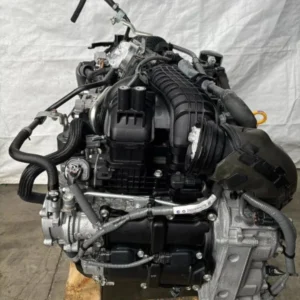
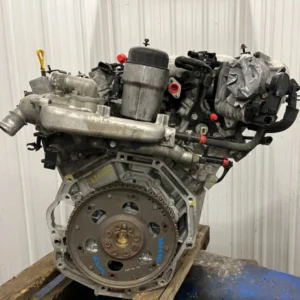
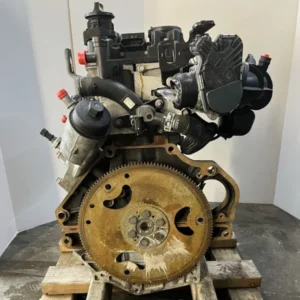
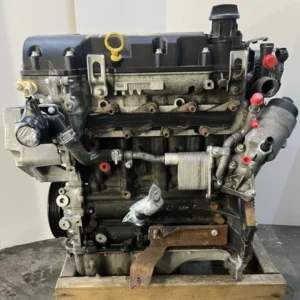
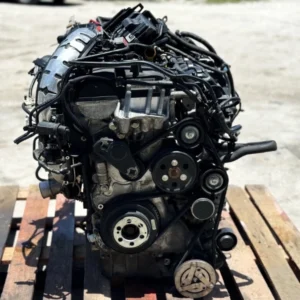
SUBARU BRZ ENGINE FOR SALE
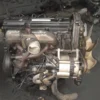
$4,399.00
Product Overview & Specifications
- Engine Variant Verified: FA24 lead stock or FA20D alternative
- All 4 Cylinders Compression Tested: Quality verified
- AVCS Variable Valve Timing Tested: Function verified
- Toyota D-4S Dual Injection System Tested: Both port AND direct injection verified
- High-Pressure Fuel Pump Verified: Direct injection supply
- Forged Connecting Rods Verified: FA-series specification
- High Compression 12.5:1 Verified: Performance characteristic
- Toyota-Subaru Partnership Engine: Joint engineering expertise
- Cross-Brand Compatibility: BRZ / FR-S / 86 / GR86
- Donor Vehicle Confirmed: Source documentation
- Naturally Aspirated Tuning Consultation: Forced induction guidance
- Free Shipping All 50 States: Freight pallet delivery
- No Core Charge: Keep your old engine
- 15 Day Warranty: Internal defects covered
 100% Fitment Assistance
 15 Days Replacement Warranty
 Free & Fast Shipping
Subaru BRZ Engine for Sale, Premium Quality at Competitive Price
Inside the hood of the Subaru BRZ is a flat-four powerplant with a soul that delivers the performance of a pure, unadulterated sports car experience. The boxer configuration, a Subaru hallmark, ensures the car has a low center of gravity. There’s also the boxer engine rumble which is no less than a song for automotive enthusiasts.
Push that accelerator and the engine will reward you with linear power. Given its low position in the chassis, this BRZ engine for sale here gives the BRZ its renowned handling characteristics.
The engine is more than just a powerplant. It’s the soul of a true driver’s car, offering a connection between human and machine that’s becoming increasingly rare in the modern automotive world. The Subaru BRZ engine for sale is an invitation to rediscover the joy of driving.
Engine Overview: Subaru BRZ (Lead Stock: FA24)
The Subaru BRZ has used one of these engines under its hood across two generations:
FA20D (1st gen BRZ 2013-2020, 2.0L NA, 200-205 HP, infamous torque dip)
FA24 (2nd gen BRZ 2022+, 2.4L NA, 228 HP, addressed torque dip)
The FA24 is the available lead stock for this Subaru BRZ engine for sale.
The FA24 is part of Subaru’s newer generation of FA-series boxer engines, providing more displacement and power for the BRZ platform. A high 12.5:1 compression ratio and a strengthened valvetrain finally give this version a fix for the torque dip that defined its predecessor. Lightweight and low center of gravity, it also helps make the BRZ so agile in handling.
Fitted with Toyota’s D-4S dual-injection system, the BRZ engine for sale here provides a broader torque curve for more responsive acceleration.
This engine strikes an excellent balance between everyday driveability and sports car performance, offering a more mature, polished experience without giving up the fun-to-drive factor for which the BRZ is famous.
The Toyota-Subaru BRZ/86 Partnership
A unique aspect of the BRZ engine story: the BRZ is a Subaru-Toyota joint venture, with the same engine powering vehicles from both brands:
Engineering split:
Subaru: Manufactures the boxer block and cylinder heads, contributes the flat-4 architecture and boxer engineering expertise
Toyota: Designed the D-4S dual injection fuel system, contributes performance tuning and the GR (Gazoo Racing) performance heritage
Why this matters for replacement: BRZ engines are essentially identical to Scion FR-S / Toyota 86 / GR86 engines of the same generation. Cross-compatibility allows for broader donor vehicle pool when sourcing replacement engines.
FA24 (2022+ BRZ, Available Lead Stock) , Detailed Specs
The newer-generation engine, addressing the FA20D’s torque dip:
The FA24 represents a focused engineering effort to address customer complaints about the FA20D’s torque dip. By increasing displacement (from 2.0L to 2.4L), the engine produces meaningfully more torque (184 vs 156 lb-ft) and provides a flatter, more linear torque curve.
FA20D (2013-2020 BRZ) , Detailed Specs
The original BRZ engine, with the famous torque dip:
The FA20D’s torque dip is a famous BRZ characteristic , the engine produces relatively high torque at low RPM (~6,500 RPM dyno peak), but there’s a noticeable dip between approximately 3,500-4,500 RPM where torque drops. This was a design characteristic, not a defect, but frustrated owners during normal driving in that RPM range.
FA20D vs FA24 Comparison
Toyota D-4S Dual Injection System (Critical Distinction)
A hallmark of both BRZ engines is the Toyota D-4S system:
What D-4S Does
Port injection (PFI): Fuel sprayed into intake port (traditional injection method)
Direct injection (DI): Fuel sprayed directly into combustion chamber (high-pressure)
Both systems work together: The ECU manages which injection system (or combination) is active based on engine conditions
Why Dual Injection Matters
Low RPM: Port injection provides smooth idle and good emissions
High RPM / High Load: Direct injection provides cooling effect and high-pressure atomization for power
Intake valve cleaning: Port injection fuel washes intake valves, preventing carbon buildup (the major issue with direct-injection-only engines like FA20DIT)
Result: Best of both worlds , the high-compression power of direct injection with the cleanliness of port injection
Distinction From FA20DIT
The FA20D and FA24 (BRZ engines) use D-4S dual injection.
The FA20DIT (WRX turbo engine) uses direct injection only.
This means BRZ engines don’t suffer the intake valve carbon buildup that affects FA20DIT engines.
Vehicle Applications (Direct Fit)
Key Engineering Features
Flat-4 Horizontally Opposed Boxer: Subaru signature architecture, ultra-low center of gravity for sports car handling
Naturally Aspirated: No turbocharger , emphasizes throttle response and weight distribution
High 12.5:1 Compression: Unusually high for production engines, enabled by D-4S dual injection
Toyota D-4S Dual Injection: Port + direct injection combination
DOHC with AVCS: Variable valve timing on both intake and exhaust
Forged Connecting Rods: FA-series specification
Rear-Wheel Drive: Unlike most Subarus (which are AWD), the BRZ/86 is RWD for sports car character
High Redline: 7,400-7,500 RPM (impressive for production NA engine)
Common BRZ Engine Service Items (Honest Disclosure)
FA20D Specific Items
Oil Consumption
Some FA20D examples (especially 2013-2014 production) develop oil consumption:
Symptoms: Oil level dropping between changes
Subaru/Toyota response: Some affected engines covered under TSB and extended warranty
Service: Piston ring replacement if severe
Fuel Pump Issues (Toyota Recall)
Toyota recalled some FA20D-equipped vehicles for fuel pump failures , verify vehicle history for any recall completion.
Torque Dip (Design Feature, Not Defect)
The 3,500-4,500 RPM torque dip is intentional design, not a failure. FA24 addresses this.
FA24 Specific Items
The FA24 is relatively new (2022+) with limited long-term service item documentation. Early indications suggest good reliability, but it’s too early for definitive long-term data.
Shared Items (Both Engines)
Spark Plug Service
30,000-60,000 mile interval recommended.
AVCS Solenoid Failures
At high mileage, AVCS solenoids can develop failures.
D-4S Fuel System Maintenance
Port injection components require less maintenance than typical direct-injection engines
High-pressure fuel pump (for direct injection side) is a wear item at very high mileage
Why Choose a Used Subaru BRZ Engine?
Cost savings vs reman ($4,399 used vs $5,500-8,500 reman plus core)
Direct OEM fit for BRZ (both generations) and shared Toyota applications (FR-S, 86, GR86)
D-4S system tested (port and direct injection both verified)
Cross-compatibility: BRZ / FR-S / 86 / GR86 engines are essentially identical within each generation
Strong aftermarket , extensive performance parts catalog (turbocharger conversion kits, supercharger kits, etc.)
Tuning potential , 250-300 HP achievable on stock NA with limited mods, 400+ HP with forced induction
Toyota-Subaru partnership quality , dual-brand engineering oversight
Here, you’ll find this Subaru BRZ engine for sale at the most reasonable price possible, with variant verified (FA24 lead stock or FA20D alternative), donor vehicle confirmed, all 4 cylinders compression tested, AVCS function tested, Toyota D-4S dual injection system tested (both port and direct injectors), forged rods verified, and complete inspection.
| engine-type | DOHC, Flat-4 (horizontally opposed boxer), naturally aspirated |
|---|---|
| available-lead-stock | 228 HP) for 2022+ BRZ, FA24 (2.4L |
| also-covering | 200-205 HP) for 2013-2020 BRZ, FA20D (2.0L |
| engine-family | Subaru FA-series (Toyota co-engineered) |
| manufacturer | Subaru (block / heads) with Toyota D-4S fuel system |
| configuration | Flat-4 (horizontally opposed boxer |
| displacement-fa24 | 2.4L (2, 387 cc) |
| displacement-fa20d | 2.0L (1, 998 cc) |
| hp-fa24-lead-stock | 000 RPM, 228 HP at 7 |
| hp-fa20d | 000 RPM, 200-205 HP at 7 |
| torque-fa24 | 184 lb-ft at 3, 700 RPM |
| torque-fa20d | 151-156 lb-ft at 6, 400-6, 500 RPM), 500-4, 600 RPM (with infamous torque dip 3 |
| compression | 12.5:1 (both engines, unusually high for production) |
| aspiration | Naturally Aspirated |
| fuel-system | Toyota D-4S dual injection (port + direct) |
| fuel-type | Premium 91 octane minimum |
| valvetrain | 16 valves, AVCS (intake + exhaust), DOHC per bank |
| block-material | Open-deck aluminum |
| head-material | Aluminum |
Which Subaru BRZ engine does this page cover?
What’s the difference between FA20D and FA24?
What’s the BRZ FA20D “torque dip”?
What is the Toyota D-4S dual injection system?
Are BRZ engines the same as Toyota 86 and GR86 engines?
Will the FA24 fit my 2018 BRZ?
Be the first to review “SUBARU BRZ ENGINE FOR SALE”
Related products
Engine
Reviews
There are no reviews yet.