
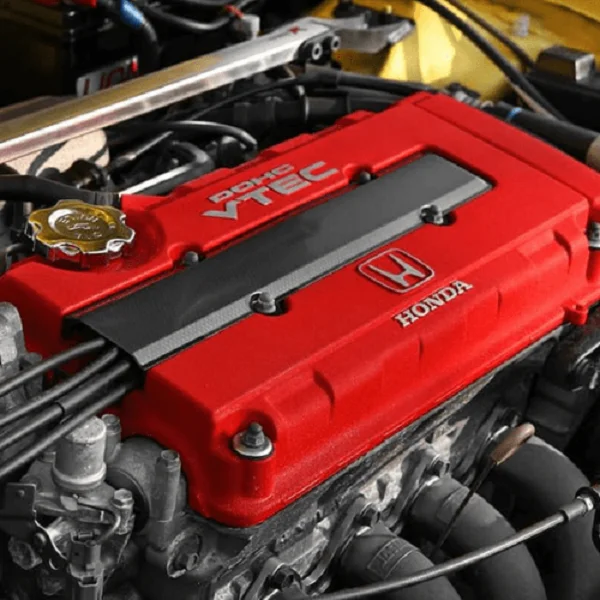
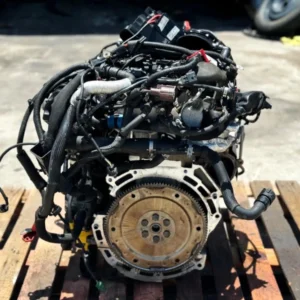
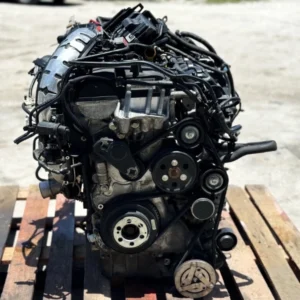
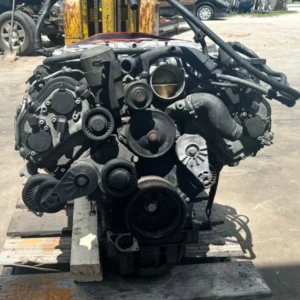
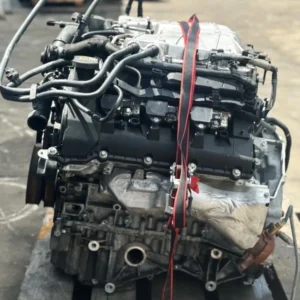
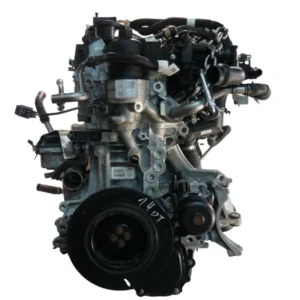
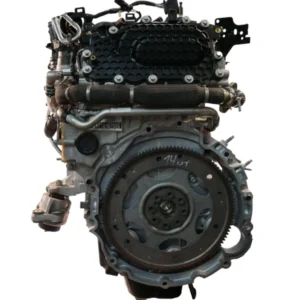
Honda B16 Engine for Sale | 1.6L DOHC VTEC Inline 4, 160 HP at 7,600 RPM
$3,000.00
Product Overview & Specifications
- In Stock, B16A, B16A2, and B16B Variants Available
- Free Shipping to All 50 States via Crated Freight, 5 to 10 Business Days
- All 4 Cylinders Compression Tested, Results Available Before You Pay
- Variant Confirmed Before Shipping (B16A2 vs B16B Type R)
- VTEC Solenoid Operation Tested, Cam Phaser Function Verified
- Timing Belt Condition Inspected (B16 Uses Timing Belt, Not Chain)
- Donor Application Documented (Civic Si EM1, Del Sol VTEC, JDM Civic SiR)
- 100% Fitment Verified Before Every Order Ships
- No Core Charge, Keep Your Old Engine
- 15 Day Replacement Warranty on Internal Defects
 100% Fitment Assistance
 15 Days Replacement Warranty
 Free & Fast Shipping
About the Honda B16 Engine
The Honda B16 is the 1.6 liter member of Honda’s celebrated B-series engine family, produced from 1989 to 2000 and powering some of the most iconic VTEC-equipped Hondas of that era. With its compact size, lightweight aluminum construction, and willingness to rev past 8,000 rpm, the B16 became a cornerstone of Honda performance heritage and remains one of the most popular naturally aspirated engine swap candidates in the import community today. At 160 horsepower from 1.6 liters in factory tune, and exceeding 200 hp on basic naturally aspirated builds, the B16 still represents one of the highest specific outputs of any production engine of its era.
Honda B16 Horsepower and Performance
The B16A2, the most common B16 in the United States, produces 160 horsepower at 7,600 rpm and 111 lb-ft of torque at 7,000 rpm in factory tune. The peak torque rpm and high redline (8,200 rpm) define the B16 character: power comes alive past 5,500 rpm when VTEC engages, and the engine pulls hard to redline. The JDM B16B Type R adds higher compression (10.8:1), more aggressive cam profiles, and a longer-rod construction for an output of 185 horsepower at 8,200 rpm in factory form, the highest specific output of any naturally aspirated 1.6L production engine of the 1990s.
The B16 Family Variants You Need to Know
Why Honda Builders Buy a Used B16
For US Civic, CRX, Integra, and Del Sol owners building K-swaps or B-swaps, a B16 is the foundation of an enthusiast naturally aspirated build. The Honda Civic SiR EG6 and EK4 chassis are some of the most popular B-swap targets globally. For 1999 to 2000 Civic Si EM1 owners, a B16A2 replacement is the like-for-like swap. For Del Sol VTEC owners, a B16A2 or B16A3 is the direct replacement.
Signs You Need a Replacement B16
- Knock or rattle under load, rod or main bearing wear on high-mileage units
- Loss of compression on one or more cylinders, head gasket or ring wear
- Excessive blue smoke, valve seal wear or piston ring wear
- VTEC engagement failure, oil pressure or VTEC solenoid issue
- Coolant in oil, head gasket failure (typically post-overheat event)
- Building a B-swap project (Civic EG, EK, EF, CRX, Del Sol)
- Upgrading from a non-VTEC engine to the B16 VTEC for higher output
Known B16 Issues We Inspect Before Shipping
- Compression on all 4 cylinders, the leading indicator of overall condition
- VTEC solenoid screen condition (a critical wear point on B-series engines)
- Timing belt and water pump condition (replace at install if past 60,000 miles since last service)
- Head gasket integrity, especially on units with previous overheating history
- Variant photographed and confirmed (B16A2 vs B16B has significant pricing difference)
- Donor application and approximate mileage documented where available
| engine-model | Honda B16 |
|---|---|
| engine-family | Honda B-Series |
| configuration | 16 valves, Inline 4 DOHC |
| displacement | 1.6L (1, 595 cc, 97.3 cu in) |
| bore-x-stroke | 81 mm x 77.4 mm (3.19 in x 3.05 in) |
| compression-ratio | 10.2:1 (B16A2 US-spec) |
| rod-length | 134 mm (5.3 in) |
| rod-stroke-ratio | 1.745 |
| aspiration | Naturally Aspirated |
| vtec | DOHC VTEC, Yes |
| fuel-system | Sequential PGM-FI |
| fuel-type | Premium Unleaded Recommended |
| block-material | Cast aluminum |
| head-material | Aluminum |
| firing-order | 1-3-4-2 |
| power | 160 hp at 7, 600 rpm |
| torque | 000 rpm, 111 lb-ft at 7 |
| application | Del Sol VTEC, EK4), Honda Civic Si EM1, JDM Civic SiR (EG6, JDM Civic Type R (EK9) |
| modifications | Aftermarket modifications available, ECU tuning all extensively supported, exhaust, intake, turbo / supercharger |
FAQs
How much horsepower does the Honda B16 have?
What is the stock performance of a Honda B16 engine?
Can I modify the Honda B16 for better performance?
Is the Honda B16 engine naturally aspirated or turbocharged?
What vehicles came equipped with the Honda B16 engine?
Does the B16 use a timing belt or timing chain?
Be the first to review “Honda B16 Engine for Sale | 1.6L DOHC VTEC Inline 4, 160 HP at 7,600 RPM”
Related products
Engine
Engine
Reviews
There are no reviews yet.