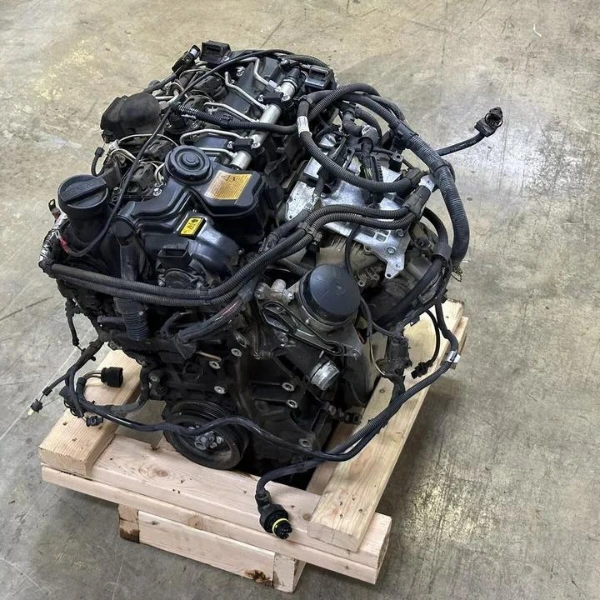
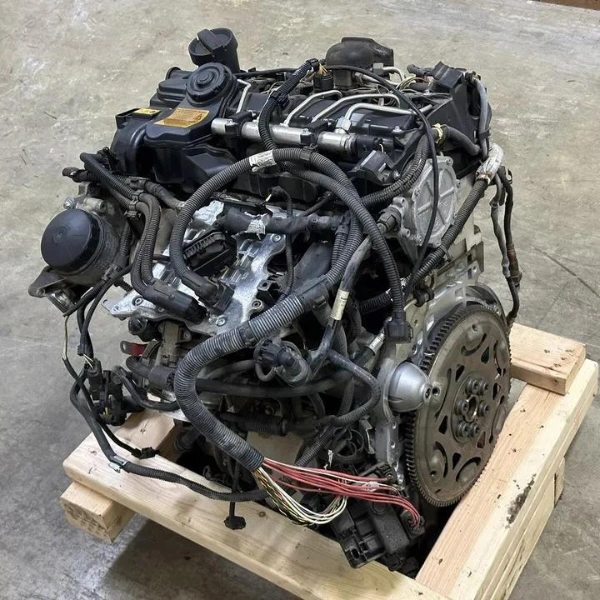
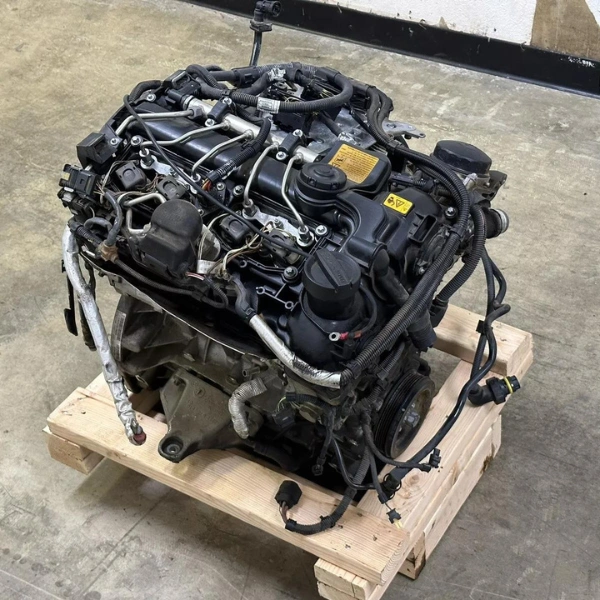
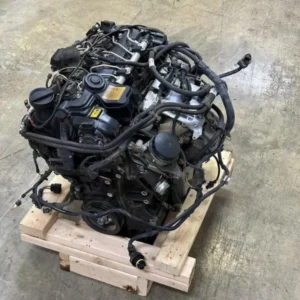
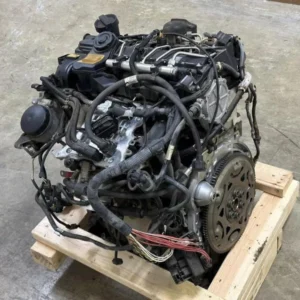
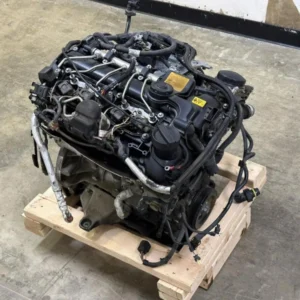
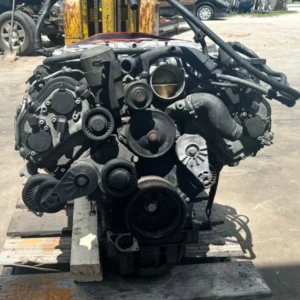
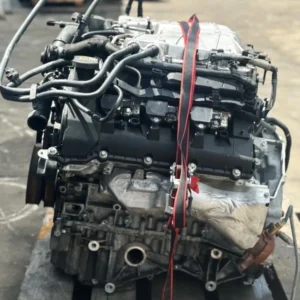
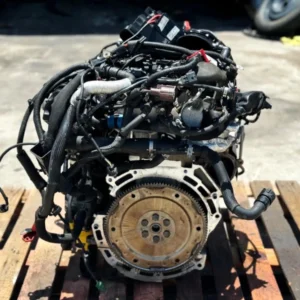
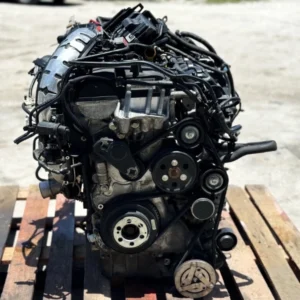
BMW N20 ENGINE FOR SALE
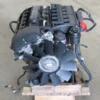
$2,499.00
Product Overview & Specifications
- In Stock, BMW N20 2.0L Turbocharged Inline-4 Available
- Free Shipping to All 50 States via Freight Pallet, 7 to 14 Business Days
- Engine Code Verified (N20B20 standard or N26B20 SULEV)
- Production Date Documented (Pre-2015 vs 2015 plus matters significantly)
- Timing Chain Service History Disclosed (Replaced or Original , Honest Disclosure)
- Oil Pump Driveshaft Bolt TSB Status Noted
- Compression Tested All 4 Cylinders
- Leak-Down Tested
- Intake and Exhaust VANOS Solenoids Tested
- Valvetronic Motor Function Verified
- HPDI Injectors Confirmed Working
- 100% Inspection Before Every Order Ships
 100% Fitment Assistance
 15 Days Replacement Warranty
 Free & Fast Shipping
BMW N20 Engine for Sale: Honest Performance Meets Honest Disclosure
The BMW N20 engine represents BMW’s downsizing strategy of the 2010s , a turbocharged 2.0 liter inline-4 designed to replace the legendary N52 inline-6 in mid-size BMW applications. With its combination of TwinPower Turbo, Valvetronic, and Direct Injection technologies, the N20 delivers impressive output (up to 245 HP and 260 lb-ft) with significantly better fuel economy than the inline-6 it replaced. Whether you’re replacing a worn N20 in your daily-driven 328i, completing a 528i rebuild, swapping into a Z4 sDrive28i, or sourcing for an X3 xDrive28i, our inventory includes carefully inspected and tested N20 engines.
However, we believe in honest disclosure of known engine issues so you can make an informed buying decision. The N20 has two documented engineering issues that every potential buyer should understand before purchase. These are not opinions or rumors , they are documented facts confirmed by BMW Technical Service Bulletins (TSBs), engineering data, and a class action lawsuit settlement.
Introduction to the BMW N20 Engine
The BMW N20 engine is a 2.0 liter turbocharged 4-cylinder gasoline engine that became a popular choice across the BMW lineup from 2011 through 2017. Known for its impressive balance of performance and efficiency, the N20 was widely used in:
- 3 Series (F30/F31 sedan and wagon, F34 GT) , the 328i, 320i variants
- 4 Series (F32 coupe, F33 convertible, F36 Gran Coupe) , the 428i variants
- 5 Series (F10 sedan, F11 wagon) , the 528i variant
- 1 Series (F20/F21) , various 120i, 125i, M135i base variants in Europe
- 2 Series (F22 coupe, F23 convertible, F45/F46 Active Tourer) , the 228i variants
- X1 (F48) , X1 xDrive28i
- X3 (F25) , X3 xDrive28i
- Z4 (E89) , Z4 sDrive28i
Two Production Variants: N20 and N26
- N20B20: The standard global variant, used in most markets including most US applications
- N26B20: The SULEV (Super Ultra Low Emissions Vehicle) variant for California ULEV II / SULEV markets and some other emissions-restricted regions. Same basic engine architecture with additional emissions equipment. If your BMW was sold in California, your engine is likely an N26 rather than N20.
Key Features of the BMW N20 Engine
- Turbocharged Performance: Twin-scroll turbocharger for enhanced power delivery, broad torque curve, and minimal turbo lag
- Direct Injection: BMW’s High Precision Direct Injection (HPDI) for improved fuel efficiency and throttle response
- Valvetronic Technology: BMW’s variable valve lift system that allows throttle-less induction, reducing pumping losses
- Double VANOS: Variable valve timing on both intake AND exhaust camshafts for optimal performance across the RPM range
- Lightweight Aluminum Construction: Aluminum-alloy block and cylinder head reduce weight while maintaining durability
- Efficient Cooling System: Electric water pump for on-demand cooling
- Dual Overhead Camshafts (DOHC): 4 valves per cylinder for optimal breathing
- Advanced Engine Management: Precise control over fuel injection, ignition timing, and boost
- EfficientDynamics Features: Auto start-stop, regenerative braking, on-demand ancillaries
Honest Disclosure: BMW N20 Known Engineering Issues
We believe an informed buyer is a satisfied buyer. Here are the two documented N20 engineering issues you should understand:
Issue 1: Premature Timing Chain Failure (Class Action Settled 2019)
The N20 (and N26 variant) have a documented history of premature timing chain and timing chain tensioner failure, particularly in pre-2015 production engines. The issue is significant enough that BMW faced a class action lawsuit (Bang v. BMW), which was settled in 2019. Under the settlement:
- BMW agreed to extended warranty coverage for affected vehicles
- Owners who paid out-of-pocket for chain repairs became eligible for reimbursement
- The settlement covered specific model years
Why does the chain fail? The original N20 timing chain and tensioner design had quality and longevity issues. Symptoms of impending failure include:
- Rattling noise on cold start (most common early warning sign)
- Check engine light with camshaft timing codes
- Eventually: chain skip, valve-to-piston contact, catastrophic engine damage
Prevention: Many N20 owners proactively replace the timing chain at 60,000 to 80,000 miles, even if it appears to be functioning normally. Full timing chain service (chain, tensioner, guides, sprockets) costs $1,500 to $3,000 at independent BMW specialists, more at dealerships.
Pre-2015 vs 2015 plus production matters significantly. BMW revised the timing chain components mid-production (approximately 2014-2015), and 2015 plus N20 engines have substantially improved chain longevity. Both customer reviews on this listing reference vehicles in the high-risk window (2013 328i and 2014 528i).
Issue 2: Oil Pump Driveshaft Bolt (BMW TSB)
A separate but equally serious N20 issue: the oil pump driveshaft sprocket retaining bolt can loosen over time. If the bolt fails completely, the oil pump stops driving, oil pressure drops to zero, and the engine destroys itself within seconds. BMW issued a Technical Service Bulletin (TSB) requiring loctite reapplication on this bolt during regular service.
Prevention: During any major service, the oil pump driveshaft bolt should be checked and re-torqued with proper thread locker. This is inexpensive labor but critically important.
What We Disclose for Every N20 We Sell
- Engine code: N20B20 standard or N26B20 SULEV
- Production date: Pre-2015 (high-risk window) or 2015 plus (revised components)
- Timing chain service history: Original chain or replacement chain installed
- Oil pump driveshaft bolt: TSB completion status if documented
This is the BMW Equivalent of the 6.4 Powerstroke Conversation
Some engines have well-known issues that buyers deserve to understand. The 6.4 Powerstroke has the EGR cooler / oil cooler issue. The Toyota 2GR-FE V6 has the oil filter housing seep. The N20 has the timing chain and oil pump driveshaft bolt issues. Knowing the issue is half the solution. A well-maintained N20 with the timing chain serviced and oil pump bolt secured is a strong, capable, fuel-efficient engine that can easily exceed 200,000 miles.
Performance and Efficiency
The BMW N20 engine offers an excellent balance of power and fuel efficiency. Compared to its N52 inline-6 predecessor, this turbocharged engine provides:
- 20 to 30% better fuel economy in mixed driving
- Comparable horsepower (245 HP N20 vs 230 HP N52)
- Significantly more torque (260 lb-ft N20 vs 200 lb-ft N52) , and at lower RPMs
- Faster 0-60 times in equivalent vehicle applications
The N20’s high redline of 7,000 RPM allows for spirited driving, while its twin-scroll turbocharger ensures ample low-end torque for daily driving.
Performance Upgrades and Tuning Potential
One advantage of the N20 is its substantial tuning potential. Popular modifications include:
- ECU Tuning: Add 30 to 60 HP and significant torque through software (companies like Dinan, Burger Motorsports, Bootmod3 offer well-regarded tunes). Beware of cheap tunes that overstress the timing chain or fueling system.
- Upgraded Intercooler: Improves cooling efficiency for consistent performance
- High-Flow Intake: Enhances airflow for better throttle response (modest gains)
- Performance Exhaust: Reduces backpressure
- Charge Pipe Upgrade: The factory plastic charge pipe is a known failure point at higher boost levels , aftermarket aluminum charge pipes are common upgrades
Maintenance Tips for N20 Longevity
To maximize the lifespan of your N20:
- Follow BMW‘s recommended oil change intervals with LL-01 spec full synthetic (not LL-04, not generic 5W-30) , though many BMW specialists recommend shortening the BMW-recommended 10,000-mile interval to 5,000-7,500 miles for severe service
- Proactive timing chain replacement at 60,000 to 80,000 miles, especially for pre-2015 production engines
- Oil pump driveshaft bolt check during major services
- Regularly inspect and replace the air filter as needed
- Monitor coolant levels and condition , electric water pump can fail
- Carbon cleaning at 60,000 to 80,000 miles , direct injection engines accumulate intake valve carbon buildup
- Address any minor issues promptly , especially timing chain rattle on cold start
Why Choose a Used BMW N20 Engine?
A quality used N20 engine offers:
- Significant cost savings versus new long block ($2,499 vs $8,000 plus)
- Faster repair turnaround than rebuilding your existing engine
- Avoid the complexity of in-vehicle repairs on a transverse-mounted (X1 F48, X3 F25) or longitudinal (most BMWs) installation
- Honest pricing with full disclosure of known issues
| aspiration | Turbocharged, twin-scroll design), twin-scroll turbocharger (single turbo |
|---|---|
| bore-x-stroke | 84 mm x 90.1 mm |
| compression-ratio | 10.0:1 |
| cooling-system | Liquid-cooled with electric water pump |
| electrical-system | Standard automotive 12V with auto start-stop |
| fuel-system | BMW’s direct injection technology, High Precision Direct Injection (HPDI) |
| fuel-type | Premium Gasoline (91 plus octane recommended) |
| displacement | 2.0 liters (1, 997 cc / 121.9 cubic inches) |
| engine-type | Inline-4 cylinder, longitudinally or transversely mounted |
| horsepower | 180 to 245 HP depending on variant |
| torque | 200 to 260 lb-ft depending on variant |
| redline | 000 rpm, 500 to 7, 6 |
| valvetrain | 4 valves per cylinder, DOHC, Double-VANOS, Valvetronic |
| block-head-material | Aluminum-alloy |
| manufacturer | BMW AG (Munich Engine Plant, Hams Hall UK Engine Plant) |
| engine-family | N20 (replaced N52 inline-6 in 4-cylinder applications) |
| variants | N20B20 (standard), N26B20 (SULEV/California emissions) |
| successor | B48 (2017 plus modular engine family) |
| production-years | 2011 to 2017 |
FAQs
What is BMW’s Valvetronic technology in the N20 engine?
Is the BMW N20 engine reliable?
What kind of fuel efficiency can I expect from the N20 engine?
Does the BMW N20 engine require special maintenance?
Should I be concerned about the timing chain issue?
What’s the difference between the N20 and the N26?
What are common upgrades for the BMW N20 engine?
Can the N20 handle aftermarket turbo upgrades?
Be the first to review “BMW N20 ENGINE FOR SALE”
Related products
Engine
Engine
Engine
Engine
Reviews
There are no reviews yet.