
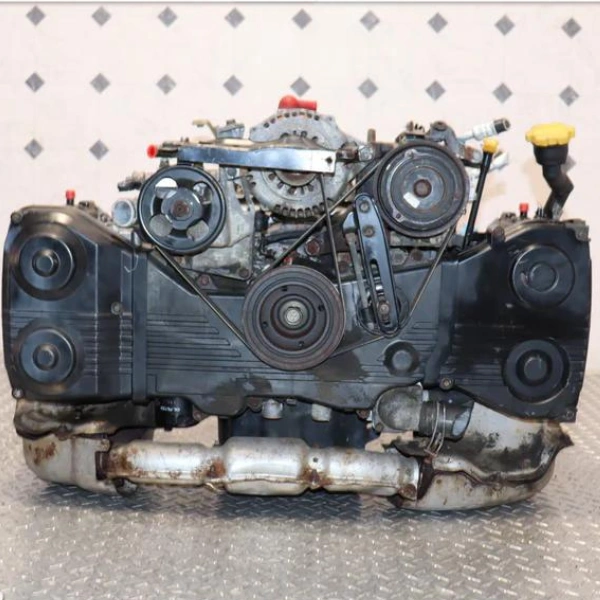
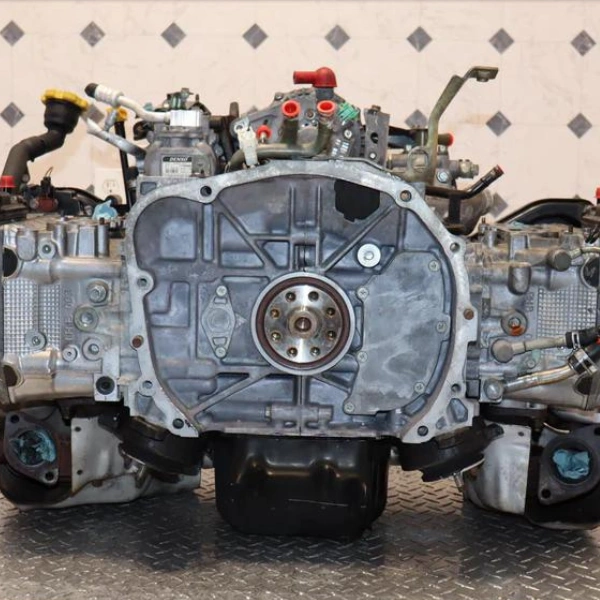
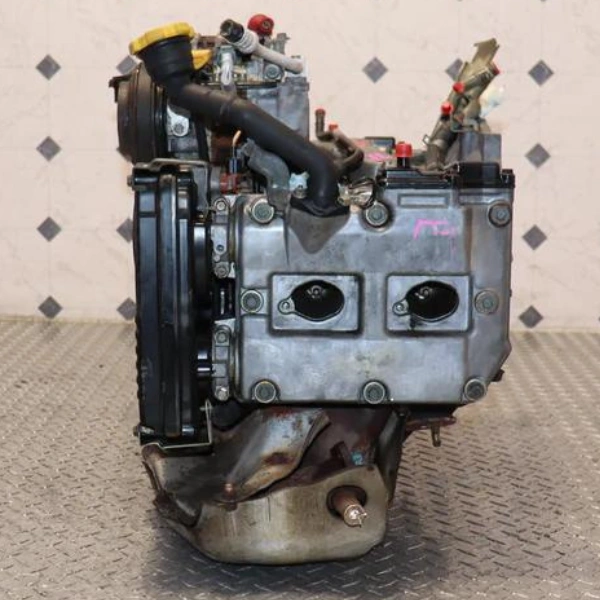
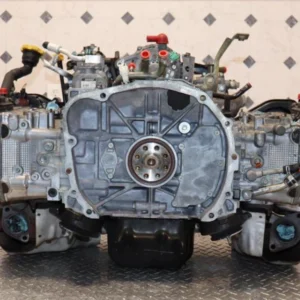
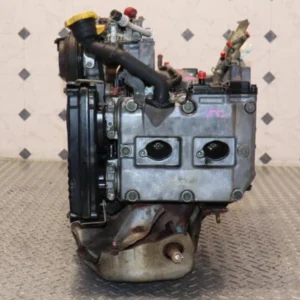
SUBARU WRX ENGINE FOR SALE
$899.00
Product Overview & Specifications
- Complete WRX Engine Family Coverage: EJ205 / EJ255 / FA20DIT / FA24F / JDM EJ20T
- VIN-Based Fitment Verification: Exact engine match for your WRX
- All 4 Cylinders Compression Tested: Quality verified
- Turbocharger Condition Verified: Shaft play, oil seals, bearing condition
- AVCS Variable Valve Timing Tested: Function verified per engine variant
- Ringland Condition Assessed: The critical EJ-turbo service item
- Head Gasket Condition Verified: Open-deck block service area
- WRX vs STI Engine Distinction: EJ257 STI separately listed
- JDM Swap Consultation Available: Cross-compatibility expertise
- Donor Vehicle Confirmed: Source documentation
- Free Shipping All 50 States: Freight pallet delivery
- No Core Charge: Keep your old engine
- 15 Day Warranty: Internal defects covered
 100% Fitment Assistance
 15 Days Replacement Warranty
 Free & Fast Shipping
Subaru WRX Engine for Sale: Turbocharged Boxer Power
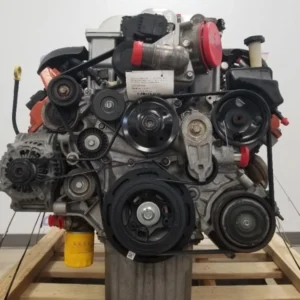
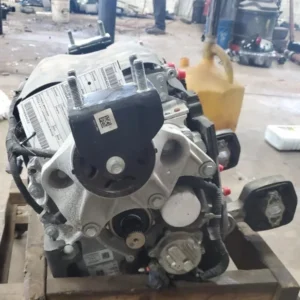
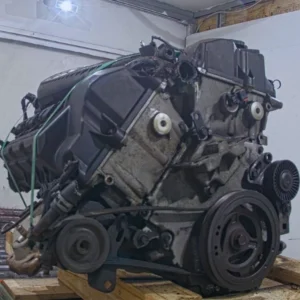
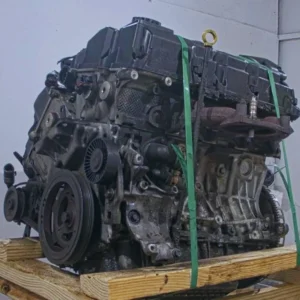
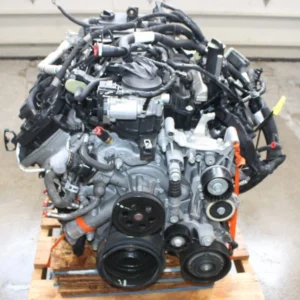
Once the very heart that used to beat inside Subaru’s performance legacy, the WRX engine for sale here is the iconic turbocharged boxer engine. Get the engine running and the boxer rumble will let you know the raw power ready to unleash a surge of adrenaline-pumping acceleration at a moment’s notice. The boxer configuration ensures a lower center of gravity for the car and provides responsive performance. Whether you’re pushing on the track or climbing mountain roads, the engine response will connect you to your WRX.
A testament to Subaru’s engineering expertise, the WRX engine for sale here is what you need if you crave adventure and speed.
Engine Overview: Subaru WRX (Lead Stock: JDM EJ20T)
The WRX has featured various engines over the years across its generations:
EJ205 (US WRX 2002-2005, 2.0L turbo, 227 HP)
EJ255 (US WRX 2006-2014, 2.5L turbo, 224-265 HP)
FA20DIT (US WRX 2015-2021, 2.0L twin-scroll turbo direct injection, 268 HP)
FA24F (US WRX 2022+, 2.4L turbo direct injection, 271 HP)
EJ20T family (JDM variants, various tunes 190-240 HP)
The available lead stock is the JDM EJ20T 2.0 liter family of turbocharged WRX engines.
This 2.0-liter powerplant family was introduced in 1989 for the Subaru Legacy RS and was a key engine when the WRX was launched globally in 1992. The flat-four configuration ensures great balance and handling, and advanced features like Subaru’s AVCS variable valve timing optimize power delivery.
The WRX engine for sale here is also in demand among tuners because of its robust internals and the EJ-series boxer architecture that has supported decades of motorsport development. A quick-spooling turbo and broad torque curve deliver impressive acceleration that the WRX is famous for.
Understanding Which WRX Engine You Need
Use this guide to identify the correct WRX engine for your application:
By Year (US Market)
Cross-Reference to Specific Engine Pages
For dedicated information on each WRX engine variant:
Subaru EJ205 Engine for Sale , 2002-2005 WRX, original US WRX engine
Subaru EJ255 Engine for Sale , 2006-2014 WRX, the 2.5L mainstream turbo
FA20DIT Engine for Sale , 2015-2021 WRX, modern direct-injection turbo
Subaru FA24 Engine for Sale , 2022+ WRX, current 2.4L turbo (and BRZ 2022+ NA variant)
Subaru EJ257 Engine for Sale , for WRX STI applications (separate engine variant)
WRX vs WRX STI Engine Distinction
Important distinction: the WRX and WRX STI are different performance levels with different engines:
The WRX STI was discontinued after 2021 , there is no STI variant of the 2022+ FA24F-powered WRX.
For STI engines, see our dedicated Subaru EJ257 Engine for Sale and Cosworth EJ257 Crate Engine for Sale pages.
Why Subaru WRX Engines Are Special
The Flat-4 Boxer Architecture
All WRX engines (across all generations) feature Subaru’s signature flat-4 horizontally opposed “boxer” configuration:
Lower center of gravity: Improves handling
Inherent primary balance: Smoother operation
Compact design: Allows lower hood lines
Iconic exhaust note: The distinctive “boxer rumble” with unequal-length headers
Turbocharged Performance
Every US-market WRX engine has been turbocharged since the WRX’s introduction in 2002:
Single-scroll turbos: EJ205, EJ255 (traditional design)
Twin-scroll turbo: FA20DIT (modern design, faster spool, broader torque)
Updated twin-scroll: FA24F (current generation)
AWD Compatibility
All WRX engines directly mate to Subaru’s Symmetrical All-Wheel Drive system:
Longitudinal mounting: Engine sits in line with vehicle direction
Direct mating to AWD transmission: 5-speed manual (older), 6-speed manual (newer), or TR580 CVT (2015+ Sport Lineartronic)
Common Service Items Across WRX Engines
All EJ-series turbo WRX engines (EJ205, EJ255, JDM EJ20T) share common service items:
Ringland Failures
Cast pistons can develop ringland failures under high boost or detonation. Most common at 80,000+ miles with modifications, less common on stock applications with premium fuel. Forged pistons for serious builds.
Connecting Rod Bearing Wear
At high mileage on cast-rod WRX engines (all WRX variants use cast rods, vs STI forged rods). Documented at 100,000-150,000+ miles.
Head Gasket Failures
Less common than NA EJ25 SOHC engines, but documented at high mileage. Open-deck block design contributes.
Turbocharger Service Items
Oil seal leaks (blue smoke)
Bearing wear (turbo whine)
Shaft play (imminent failure indicator)
Typical service interval: 100,000-150,000 miles
Banjo Bolt Screen Blockage
Common cause of turbo oil starvation. Should be inspected at any service.
FA-series engines (FA20DIT, FA24F) have unique service items:
Timing Chain Stretch (FA20DIT)
Most well-documented FA20DIT issue, especially 2015-2018 production. Updated chain design in 2019+.
Intake Valve Carbon Buildup (Direct Injection)
Typical of all direct-injection engines (FA20DIT, FA24F). Walnut blasting service at 80,000-100,000 miles.
High-Pressure Fuel Pump Failures
Direct injection systems require 200 bar fuel pressure. HPFP failures documented on some examples.
| engine-type | Flat-4 (horizontally opposed boxer), turbocharged (all WRX engines) |
|---|---|
| available-lead-stock | 190-240 HP), JDM EJ20T family (2.0L turbo |
| page-coverage | All Subaru WRX engines across all US production generations |
| wrx-generations | EJ205 (2002-2005), EJ255 (2006-2014), FA20DIT (2015-2021), FA24F (2022+) |
| engine-family | Subaru EJ-series (older) and FA-series (newer) |
| manufacturer | Subaru Corporation |
| configuration | Flat-4 (horizontally opposed boxer |
| displacement-range | 2.0L (most WRX engines), 2.4L (FA24F), 2.5L (EJ255) |
| hp-range | 190 HP (JDM EJ20T base) to 271 HP (FA24F current) |
| torque-range | 200-295 lb-ft across generations |
| aspiration | Turbocharged across all generations |
| valvetrain | DOHC per bank with AVCS variable valve timing |
| fuel-type | Premium 91 octane minimum (all turbocharged) |
| block-material | Open-deck aluminum |
| price | $899.00 (JDM EJ20T lead stock) |
Which Subaru WRX engines does this page cover?
Which WRX engine fits my year?
What’s the difference between WRX and WRX STI engines?
What’s the JDM EJ20T lead stock?
What’s the EJ20T?
How is the WRX engine different from a regular Subaru engine?
Are WRX engines interchangeable across years?
How long do WRX engines last?
Be the first to review “SUBARU WRX ENGINE FOR SALE”
Related products
Engine
Engine
Reviews
There are no reviews yet.