
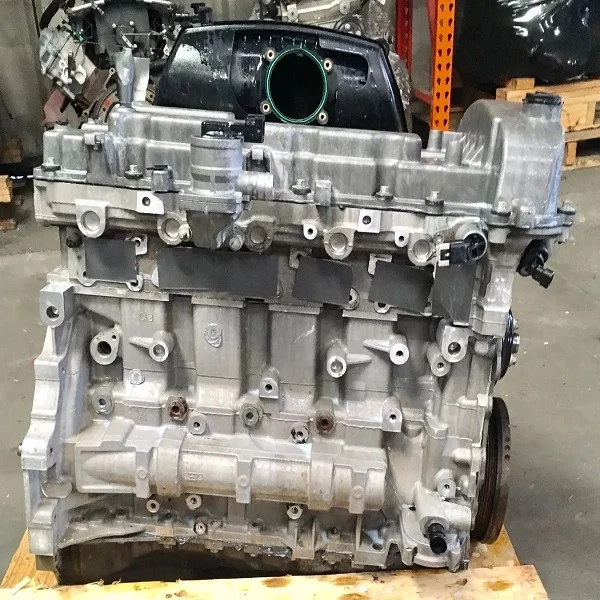
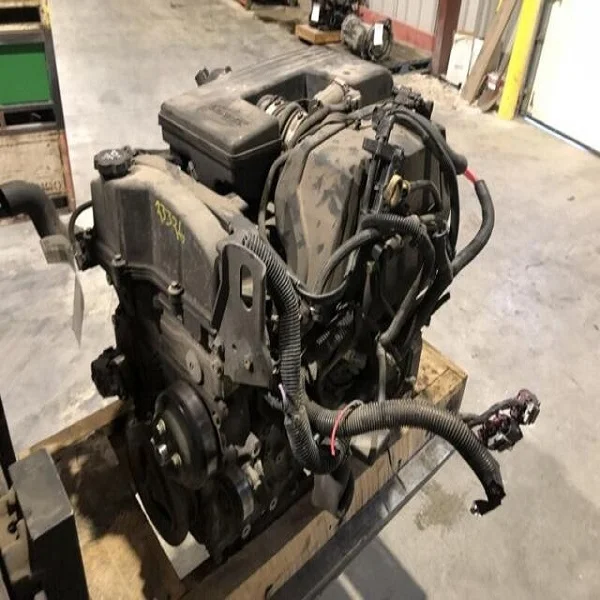
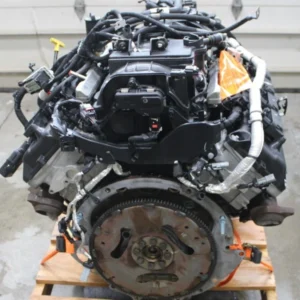
2008 Hummer H3 3.7 Engine for Sale | GM Atlas LLR Inline-5 DOHC (242 hp)
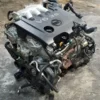
$1,299.00
Product Overview & Specifications
- In Stock, 2007 to 2010 H3 Donor Cores Available
- Free Shipping to All 50 States via Freight Pallet, 5 to 10 Business Days
- All 5 Cylinders Compression Tested, Results Available Before You Pay
- Engine Identified as Atlas LLR (NOT the older 3.5L LK5)
- Donor Application Documented (H3, Colorado, or Canyon)
- Timing Chain Stretch Inspected (Common Atlas LLR High-Mileage Wear Point)
- VVT (Variable Valve Timing) Solenoid Operation Verified
- Cylinder Head Inspected for Cracks
- 100% Fitment Verified Before Every Order Ships
- No Core Charge, Keep Your Old Engine
- 15 Day Replacement Warranty on Internal Defects
 100% Fitment Assistance
 15 Days Replacement Warranty
 Free & Fast Shipping
About the 2008 Hummer H3 3.7 Engine
The Hummer H3 uses a powerful engine, the GM Atlas LLR engine, an inline-5 piston engine from the Atlas family of engines made by General Motors. This 2008 Hummer 3.7 engine for sale delivers robust acceleration, formidable off-road capabilities, and the distinctive sound of a GM straight-5.
The GM Atlas Family Explained
The Atlas family is a unique line of GM truck engines featuring an unusual inline-5 configuration alongside the more traditional inline-4 and inline-6 variants. The Atlas family included:
The inline-5 LLR variant is what sets the H3 apart, delivering V6-equivalent power output (242 hp) with the characteristic torque curve and compact packaging of a longitudinal inline engine. The Atlas LLR was a well-engineered modern engine when introduced, with DOHC, variable cam timing on the intake side, and aluminum cylinder heads on a robust cast iron block.
LK5 vs LLR , Important Distinction
If you’re searching for an H3 engine, you must confirm which generation you need:
- 2006 Hummer H3: Used the 3.5L LK5 Inline-5 (220 hp, 225 lb-ft) , earlier, lower-output Atlas variant
- 2007 to 2010 Hummer H3: Used the 3.7L LLR Inline-5 (242 hp, 242 lb-ft) , the upgraded engine, THIS LISTING
- 2008 onward H3 Alpha trim: Used the 5.3L LH8 V8 (300 hp) , completely different engine, NOT this listing
The 3.5L LK5 and 3.7L LLR are mechanically related but NOT directly interchangeable without ECU and harness considerations. Confirm your year before ordering.
Application of the 2008 Hummer H3 Engine
The Atlas LLR engine was used across multiple GM mid-size truck and SUV applications:
- Hummer H3 (2007 to 2010): The primary application this listing covers. The H3 used the LLR exclusively from 2007 onward (replaced the earlier 3.5L LK5 from the 2006 model year).
- Hummer H3T (2009 to 2010): The pickup truck variant of the H3, also used the LLR.
- Chevrolet Colorado (2007 to 2012): The mid-size pickup that shared the Atlas LLR with the H3.
- GMC Canyon (2007 to 2012): The corporate cousin to the Colorado, also using the Atlas LLR.
- Off-Road Vehicle Conversions: Because of the durability and ample torque of the Hummer H3 3.7 engine, this engine has been adapted for use in dune buggies, Jeep conversions, and custom off-road builds.
- Light Commercial Conversions: The power-to-weight ratio and flexibility of the Atlas LLR makes it suitable for light commercial vehicle repower applications.
Key Features of the 2008 Hummer H3 Engine
- Performance: The H3 with the 3.7L LLR delivers strong off-road power with broad torque availability across the rpm range. The engine is designed for low-end grunt with adequate top-end power for highway driving.
- DOHC Architecture: Dual overhead camshafts with 4 valves per cylinder (20 valves total) provide better breathing than older OHV engines. The LLR is unambiguously DOHC despite some references to SOHC architecture in legacy documentation.
- Variable Valve Timing: The LLR features VVT on the intake camshaft, optimizing power and efficiency across the rpm range.
- Fuel Efficiency: The H3 with the 3.7L engine was not class-leading in fuel economy. EPA ratings were typical of the mid-size truck class of its era. Real-world fuel economy with the LLR ranges from 14 to 18 mpg combined depending on driving conditions.
- Transmission Pairings: The LLR was offered with a 5-speed manual transmission (more common on Colorado / Canyon, occasionally H3) or a 4-speed automatic Hydra-Matic 4L60-E (most common H3 pairing).
- Off-Road Capabilities: The H3 was specifically designed for off-road use, and the 3.7L LLR’s broad torque curve and durable construction support that mission. The H3 was approved for fording up to 24 inches of water with stock components.
- Towing Capacity: The 2008 Hummer H3 with the 3.7L LLR engine has a towing capacity of 3,000 to 4,500 pounds depending on the variant and the availability of the towing package.
- Technology: Compared to modern contemporary SUVs, the 2008 H3 cannot be considered a technology-rich vehicle. However, the engine is well-engineered with DOHC, VVT, and modern electronic fuel injection.
Signs You Need a Replacement LLR
- Timing chain rattle on cold start (the most common Atlas LLR high-mileage wear point)
- Loss of compression on one or more cylinders
- VVT cam phaser noise or fault codes
- Excessive oil consumption past piston rings
- Cylinder head crack symptoms (coolant loss, white smoke)
- Connecting rod or main bearing knock under load
- Donor H3, Colorado, or Canyon has been totaled and the engine is being moved to another chassis
Known LLR Issues We Inspect Before Shipping
- Timing chain stretch: The single most discussed Atlas LLR concern. The original-spec timing chains can develop slack at 100,000+ miles, causing rattle on cold start that gets worse over time. Severe timing chain stretch can cause catastrophic engine damage. We inspect timing chain condition on every unit, document findings, and disclose before shipping.
- VVT solenoid wear: The intake VVT solenoid can develop wear or contamination, causing cam timing fault codes. We test VVT operation where accessible.
- Oil pressure / oil cooler: Some LLR engines develop oil pressure concerns related to internal oil cooler bypass. We document oil pressure indicators where available from donor diagnostic.
- Cylinder head cracking: A high-mileage LLR concern, particularly on engines that experienced overheating events. We inspect cylinder head visually before shipping.
Why Buy a Used Hummer H3 3.7 Engine?
- Reliability: The Atlas LLR is fundamentally a robust GM truck engine, sharing parts and engineering with the high-volume Colorado / Canyon platform.
- Power: 242 hp and 242 lb-ft delivers respectable performance for the H3’s vehicle weight.
- Versatility: The shared platform with Colorado and Canyon means parts availability remains good and engine swap support is well-documented.
- Cost Efficiency: Used LLR engines are an affordable repower option vs reman or new GM crate engines.
- Off-Road Heritage: The H3 was built for off-road, and the LLR was the engine that powered it through the H3’s most-collected production years.
LLR Myth Busters
Myth: The Hummer H3 3.7L engine is ineffective and consumes excessive fuel.
Reality: The H3 with the 3.7L LLR was not the most fuel-efficient SUV on the market, but it wasn’t catastrophically thirsty either. EPA fuel economy was comparable to other mid-size SUVs of similar power and off-road capability from the era (Pathfinder, Wrangler 4-cylinder, etc.).
Myth: The H3‘s 3.7L engine is underpowered.
Reality: While not a high-performance engine, the 3.7L LLR’s 242 hp and 242 lb-ft are adequate for most driving conditions. The H3 was built as a dual-purpose vehicle (on-road comfort + serious off-road capability), and the LLR delivers on both axes.
Myth: The Hummer H3 with the 3.7L engine is unreliable and requires constant maintenance.
Reality: Like any vehicle, proper maintenance is the foundation for reliability. The H3 had documented quirks (electrical concerns, occasional oil leaks), but these are not endemic problems with the LLR engine itself. Properly maintained H3s have logged 200,000+ miles regularly, with the LLR continuing to perform.
Myth: The Hummer H3 3.7L is not powerful enough for towing or off-road.
Reality: The H3 with the LLR was officially rated to tow 3,000 to 4,500 lbs depending on variant and tow package. Off-road, the engine’s broad torque curve combined with the H3’s 4WD system and approach / departure angles delivers serious capability.
Myth: The Hummer H3 SUV is environmentally unfriendly because of its size and engine displacement.
Reality: The H3 was designed for a specific use case (off-road and adverse conditions), and its environmental footprint should be evaluated against that mission. The LLR is a modern fuel-injected engine with VVT and reasonable emissions performance for the era. Newer engine technologies have evolved since the H3, but the LLR remains a legitimate option for buyers needing the H3 platform’s off-road capability.
| aspiration | Naturally Aspirated |
|---|---|
| camshaft-type | DOHC (Dual Overhead Camshaft) |
| combustion-system | Electronic (Multi-Point) Fuel Injection |
| compression-ratio | 10.0:1 |
| configuration | Inline-5 |
| cylinder-block-alloy | Cast Iron |
| cylinder-bore | 95.5 mm |
| piston-stroke | 101.6 mm |
| valve-train | 20 valves total, 4 valves per cylinder, DOHC |
| variable-valve-timing | Yes (intake cam) |
| engine-family | GM Atlas (LLR variant) |
| rpo-code | LLR |
| displacement | 3.7 liters (3, 653 cc / 223 cu in) |
| horsepower | 242 hp at 5, 600 rpm |
| torque | 242 lb-ft at 4, 600 rpm |
| vehicle-curb-weight-h3 | 4, 700 to 4, 900 lb (NOTE: this is vehicle weight, engine alone is approximately 370 to 400 lb), not engine weight |
| towing-capacity-h3 | 000 to 4, 3, 500 lbs |
| originally-mated-with | 5-speed manual or 4-speed automatic (Hydra-Matic 4L60-E) |
| production-years-llr | 2007 to 2012 |
FAQs
Availability of the 2008 Hummer H3 engine?
What’s the price of the used 2008 Hummer H3 engine?
Is the Hummer H3 with the 3.7L engine suitable for everyday driving?
What kind of transmission does the Hummer H3 with the 3.7L engine have?
What’s the difference between the LK5 and LLR engines?
Will this LLR fit a Chevrolet Colorado or GMC Canyon?
How reliable is the Atlas LLR?
Can I rebuild the LLR with aftermarket parts?
Be the first to review “2008 Hummer H3 3.7 Engine for Sale | GM Atlas LLR Inline-5 DOHC (242 hp)”
Related products
Engine
Engine
Reviews
There are no reviews yet.