
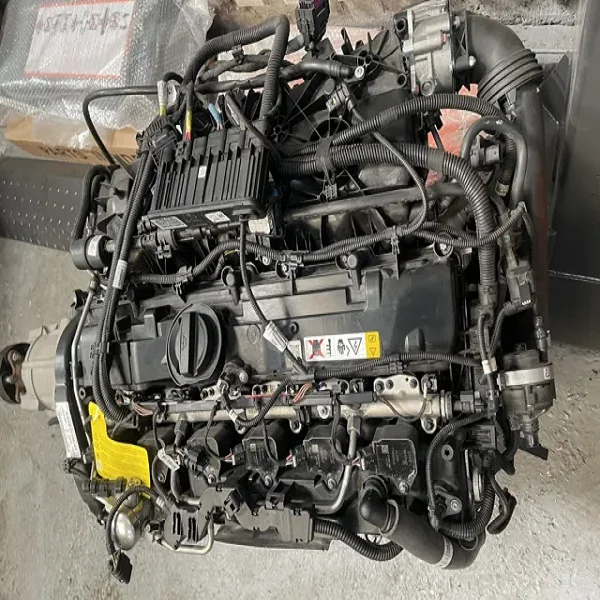
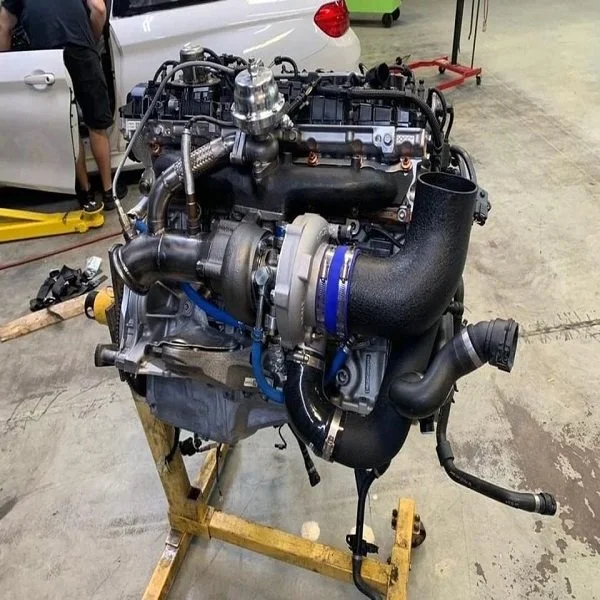
BMW B58 Engine for Sale | 3.0L Turbocharged Inline-6 (340i, M340i, GR Supra)
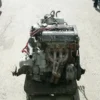
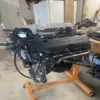
$4,000.00
Product Overview & Specifications
- In Stock, Gen 1 and B58TU1 Variants Available, Call to Confirm
- Free Shipping to All 50 States via Freight Pallet, 5 to 10 Business Days
- Fully Inspected and Documented Before Shipping
- B58 Generation Confirmed, B58B30M0 or B58TU1 ML/OL Documented
- Valve Cover Gasket, VANOS, Cooling System, and PCV Condition Assessed
- Carbon Buildup Disclosed (Walnut Blasting Recommended at Installation)
- 100% Fitment Verified Before Every Order Ships
- No Core Charge, Keep Your Old Engine
- 15 Day Replacement Warranty on Internal Defects
 100% Fitment Assistance
 15 Days Replacement Warranty
 Free & Fast Shipping
About the BMW B58 Engine
The BMW B58 is widely regarded as BMW’s best modern turbocharged Inline-6 engine and one of the strongest turbocharged engines produced by any manufacturer in its displacement class. Introduced in 2015 as the replacement for the N55, it has been named to the Ward‘s 10 Best Engines list five times (2016, 2017, 2019, 2020, 2024) and has earned enthusiast praise as “the modern 2JZ“ for its combination of factory reliability and extraordinary tuning potential on stock internals.
Two Engineering Decisions That Made the B58 Different
Two engineering decisions made the B58 fundamentally different from the N55 it replaced:
First, a closed-deck block design: unlike the N55’s open-deck construction where the cylinder walls have gaps in the water jacket, the B58 has solid material surrounding the cylinder walls throughout. This dramatically reduces cylinder bore distortion under boost and heat, improving both reliability and the engine’s ability to handle high boost pressure.
Second, a forged steel crankshaft and drop-forged cracked connecting rods: components that are meaningfully stronger than the N55’s comparable hardware and have been documented to survive 600 to 700 horsepower on stock internals.
The B58TU1 Technical Update
The B58TU1 technical update introduced in 2018 to 2019 added a larger turbocharger, revised cylinder head with improved combustion chambers, a higher-pressure fuel injection system (350 bar vs the Gen 1’s 200 bar), and split the B58 into ML (335 hp, middle output) and OL (382 hp, high output) variants. The OL variant powers the M340i, M240i, Z4 M40i, and Toyota GR Supra 3.0, the same engine architecture used in multiple brands simultaneously.
Signs You Need a Replacement Engine
- Coolant loss without visible external leak, cracked plastic expansion tank (common on higher-mileage B58 units) or water pump failure
- Oil leaks at valve cover gasket or oil filter housing, the two most common B58 external oil leak points
- Rough idle or misfires, carbon buildup on intake valves from direct injection, particularly on high-mileage examples (carbon buildup requires walnut blasting to clean)
- PCV system fault codes or oil mist in intake, PCV valve built into the valve cover can fail causing crankcase pressure buildup
- VANOS fault codes or rough running, VANOS solenoid wear on high-mileage units or those with extended oil change intervals
- Turbo wastegate rattle at idle, more common on tuned engines running higher boost, audible as a faint rattling at idle
Known Problems With This Engine
Carbon buildup on intake valves, inherent to direct injection B58 engines: Direct injection sprays fuel directly into the cylinders, bypassing the intake valves. This means the intake valves accumulate carbon deposits from the PCV system without fuel washing them clean (as port injection does). At 50,000 to 60,000 miles most B58 engines benefit from walnut blasting to clean the intake valves. Symptoms include rough idle, hesitation, and reduced response. This is a maintenance item, not a defect.
Valve cover gasket leak: The valve cover gasket on the B58 seeps with age, typically becoming apparent at 50,000 to 100,000 miles. This is more common on engines run at high temperatures frequently. We inspect the valve cover area before shipping.
Cooling system: The B58’s plastic coolant expansion tank and water pump housing can crack under repeated heat cycling. We inspect the cooling system connection points before shipping. Service the cooling system completely at installation.
PCV valve failure: The PCV (positive crankcase ventilation) valve is integrated into the B58 valve cover. PCV failure causes increased crankcase pressure and oil consumption. We note any PCV-related indicators before shipping.
B58 Gen 1 vs B58TU1 compatibility: The Gen 1 B58 (2015 to 2017) and the B58TU1 (2018 onward) have different cylinder heads, ECU calibrations, and some different ancillary components. They are not directly interchangeable without ensuring matching ECU and wiring. We confirm the generation before every order ships.
| displacement | 2, 998 cc (3.0L) |
|---|---|
| engine-code | B58B30M0 (Gen 1) |
| configuration | 24 valves, DOHC, Inline-6 |
| bore-x-stroke | 82 mm x 94.6 mm |
| compression-ratio | 11.0:1 |
| aspiration | Single twin-scroll turbocharger |
| horsepower | 322 to 382 hp, confirmed at order, variant dependent |
| torque | 332 to 369 lb-ft, variant dependent |
| redline | 000 rpm, 7 |
| vanos | Double VANOS, intake and exhaust |
| valve-lift | Valvetronic variable valve lift |
| block-design | Closed-deck, significantly stronger than N55 open-deck |
| crankshaft | Forged steel |
| connecting-rods | Drop-forged cracked (fractured) |
| fuel-system | High-pressure direct injection, up to 350 bar (B58TU1) |
| block-material | Aluminum alloy with plasma arc wire spray coating |
| production-years | 2015 to present |
| awards | 2017, 2019, 2020, 2024, Ward’s 10 Best Engines: 2016 |
| applications | 540i, BMW 340i, M340i, Toyota GR Supra 3.0 and more, X3/X4/X5/X6 M40i, Z4 M40i |
FAQs
What is the difference between the BMW B58 and the N55?
What is the B58TU1 technical update?
Why does the B58 develop carbon buildup?
How much power can a stock B58 make with tuning?
Is the B58 in the Toyota GR Supra the same as the BMW B58?
Is there a core charge?
Be the first to review “BMW B58 Engine for Sale | 3.0L Turbocharged Inline-6 (340i, M340i, GR Supra)”
Related products
Engine
Engine
Engine
Engine
Reviews
There are no reviews yet.